








“We’re putting political answers on people’s problems,” he says. “Everything I see is broken. The politics have ruined our city. People move politically on problems, and it doesn’t help anyone.”
“No one is getting the help they need,” Moreno says. “Our police department is being destroyed, they’re not being able to do their jobs. Politicians are gentrifying neighborhoods, and the people are not getting the help they need, not allowing them to flourish and thrive in a world that is available to them, because, politically they keep them down to drive their political message.
“I’m just tired of it. Nobody’s willing to stand up to it and do everything they can to fix it, so I decided I’m that person.”
Moreno grew up in California, and served in the United States Army as an Airborne Military Police Officer, serving in Panama and Germany as well as at Fort Bragg, North Carolina. Following his military service, he worked as a Plumber’s Apprentice until attending the police academy. Upon graduation, Moreno became a City of Pittsburgh Police Officer, working his way up from foot patrol to the Narcotics Unit. He is a certified Academy instructor, field training instructor, and Crisis Intervention Trainer. Retired from the Police Department, Moreno resides on the North Side with his wife, also a retired City of Pittsburgh Police Detective, “in the house that she grew up in.” They have a total of five children and two grandchildren.
Moreno is running on the Republican ticket after a Primary loss to the Democratic nominee, State Representative Ed Gainey.
“I was always registered Democrat,” he says. “I switched in 2018 because I was mad at the whole process,” after actively working with his union, the Fraternal Order of Police, to vet candidates, but when I decided to run for Mayor I switched back because I was told that‘s the only way…Pittsburghers…the Democratic Party. I almost won the Democratic endorsement, but I didn’t win the Primary. I got written in on the Republican side. People wrote me in, so, that’s how I’m representing. People wanted me here, and I’m here.”
Pittsburgh has not elected a Republican candidate as Mayor since the 1920s. As a Democratic candidate, Moreno received 13 percent of Democratic votes, as opposed to Gainey’s 46 percent and Incumbent Mayor Peduto’s 39 percent. Moreno became eligible to run as the Republican candidate with 1379 write-ins. Peduto also received 285 write-ins.
Moreno’s “tag line,” “90 Neighborhoods, One Pittsburgh,” is more a focus on economic and social issues.
“You look at crime rates, you look at the poverty rates, and you look at the school performances, and that’s where you see the biggest problems,” Moreno says. “our East End Neighborhoods are obviously treated the worst, and that’s because we keep those communities on government assistance, and they don’t have the opportunities school-wise because their schools are just falling apart, their homes are falling apart, they can’t get jobs to sustain their own lives, so if we can make those things available to them, they’ll get the help they need.”
Moreno says he’d like to create a “Department of Neighborhoods,” in an attempt to focus more specifically on the common local needs.
The city could then “direct all of our resources to the individual neighborhood for what they need,” Moreno says. “What we do know is a blanket policy that covers the entire city, and not everybody gets the resources that they need. If we identify the problems and direct our resources right to it, everything gets better.”
Using those East End neighborhoods as an example, Moreno says city resources such as job training would be a good step.
“It starts with mobility,” says Moreno.” We quit teaching Driver Education in our city schools, so, if we could start teaching Driver Education again, get people’s driver’s licenses, get them to be mobile, they can get to jobs that they want instead of jobs that they can get to.
“Driver Licenses also create the ability to get job training,” he says. “A lot of union trades require a license, and people don’t necessarily have to have a car.”
“Once you do that, it frees up a lot of paths to get the jobs that you want,” Moreno says.
“So, how do we get vehicles? Well, the City of Pittsburgh tows hundreds of vehicles a month, and they auction them,” he says.
Moreno proposes some of these vehicles could be used in a job training program for city residents. “We have an auto shop. We could train young men and women to fix cars. Instead of auctioning these off for profit, we can use the program to teach people [that] if you can’t fix the car, we can strip it down and create a ‘parts department,’ you can learn the sales of auto parts and how the auto parts industry functions, or you can fix the vehicles and get them into the program so people have vehicles to use.”
“If that happens, it opens up an even bigger stream,” says Moreno. “We’ve created employment for a market that has a lot of people who want to work, we’re rehabbing our own vehicles, and we’re keeping people in the City of Pittsburgh.
Moreno says this type of program could also be used for housing.
“You take people from their own communities, target abandoned properties, and go in there and fix them,” he says. “Now you can put people in there who need housing, and you will have also learned a trade, you become a City employee, you have a pension in your future, you have benefits, and you have a secure job. You can also choose to go anywhere in the country because now you have a skill that’s used worldwide.”
Child care is another arena in which Moreno feels the City could provide service for residents.
“We have enough space,” he says. Citing the equity report showing Black women in the City of Pittsburgh are in worse straits than anywhere else in the country, Moreno says “what the government has told them is, if you go to college, and you get a degree, you can bring yourself out of poverty. So, you start out at CCAC, that’s covered. You go to a state university, that’s generally covered. They got degrees and they couldn’t get out of [poverty], because when you’re on government assistance if you make too much money, they take away the benefits you receive in health care and housing. That’s where the problem lies. They trap you right there.”
“So, if you get that job and it’s good-paying, but now you have to pay child care, it takes you back under the poverty level because you’re taking that extra money and putting it in child care. So, that keeps them where the government wants them, as part of that control effort,” Moreno says.
“I know that it’s a ‘hot button’ subject —‘why are we paying for other people’s child care, for their irresponsibility?’ and all the other very valid things people have questions for—but it’s one of the biggest problems we face, and if it’s a problem, we have to fix it,” says the candidate. “We can do it self-sustaining by taking the Martin Luther King Primary Care Center on Herron Avenue, which sits abandoned right now, but it’s fully equipped, to take care of this problem. So, we use people from our jobs training to go in and fix that, then go into the community and find people willing to be child care providers, find people willing to be nurses, we can find people in the community who want to be social workers and counselors. So now you have someone who can take their kids very close to their homes to be taken care of by people in their communities. We can do this all over the city.”
Moreno says these programs could be affordable if City Administration staffing levels were reduced.
“We are so top-heavy in Administration. The City Administration has increased by 34 percent,” Moreno says. “For instance, in the Mayor’s Office, six people make over $100,000, including an Assistant Office Manager. That’s unacceptable.”
“There are so many bureaucracies that have been created inside of the City, we have to go in, scale those down, and really put the effort where he needs it the most,” he says. “We don’t need more administrators. We need more people out on our streets keeping them clean and keeping them functional. The money is there. Right now, there’s $613 million that’s misspent, that’s mismanaged.”
An issue that repeatedly rears its head in every administration is the impact of non-profit organization’s tax-exempt status on the City’s budget.
“There’s a model to take care of that, and I’ve asked this question openly in debates, about why nobody takes advantage of it,” Moreno says. “Our politicians just lie to us at every turn.”
Moreno says the Peduto Administration’s claim that larger non-profits contribute funding for otherwise-unfunded programs is “rife with corruption. There is no accountability to it. On the other hand, my opponent, Ed Gainey, says they’re going to start a lawsuit to try to force them by lawsuit, into sharing in the payment for them being in the City.”
Moreno mistakenly claims that a previous lawsuit against UPMC, brought by the Administration of former Mayor Luke Ravenstahl, was “settled,” thus eliminating the possibility of another suit. Rather, the lawsuit was dropped by the Peduto administration in favor of a deal with the health-care giant whereby the non-profit would provide funding for endeavors which otherwise could not be funded in the City budget.
“My answer is ‘Saint Margaret’s,” Moreno says. “Saint Margaret’s [Hospital] sits on property that the City of Pittsburgh owns. There is a one-line item in the City budget, and, when I was looking for places to cut, I found this “non-profit income,” and I went to [City Controller] Michael Lamb, and I asked what it was, and he said, ‘Saint Margaret’s.’ They pay a dollar amount as a surcharge for services rendered. I couldn’t believe it.”
Lamb says that is an incorrect interpretation of the line item, which represents all “payments in lieu of taxes” negotiated by the city from all non-profit organizations. The payment by Saint Margaret is a lease fee for a portion of their parking lot which sits on land formerly used by the City Water Authority and was negotiated by the City Solicitor in a previous administration prior to the hospital becoming a part of UPMC. The hospital itself sits on land that is part of the Borough of Aspinwall.
Moreno believes this indicates there is some sort of deal already in place with UPMC that could be generalized to the entire healthcare system, “but I just have to figure out what it is. My first intuition is to make it a dollar-per-square-foot value. Take that, figure out how many dollars per square foot, then apply that dollar amount across the board to all the non-profits. If we do that, we don’t want to do that ‘cash,’ because cash corrupts. We want to give them venues to have them fund, by law, or pay the full cash amount. We could use them to fund our pensions, we could use them to fund jobs training, we could use them to put, not clinics, but doctor’s offices throughout our neighborhoods that are underserved. When we make them accountable to the City, we’re going to be able to take care of ourselves, and they aren’t going to have to pay the full amount. If they want to fight about it, we’ll put that full amount there and just apply it. When they don’t comply, we’ll bring them into court and they will explain why they’re not paying the full amount.”
Moreno says the main reason he should be elected is to “stop this political corruption and the abuse that’s laid upon our communities through lack of leadership. Your chance is right now. I am the last and only chance to change what’s going on. My opponent is a career politician and a part of all these activities you see. He has the ability, as a State Representative, to fix a lot of the problems in his own district, but he doesn’t.”
“I have to be able to be given the chance to show Pittsburgh that we can do this together, that we can end the political corruption, end the abuse that our politicians weigh upon us, and we can focus on our neighborhoods and get our city back in line with our mown values.”
Story Courtesy of Nancy Hart
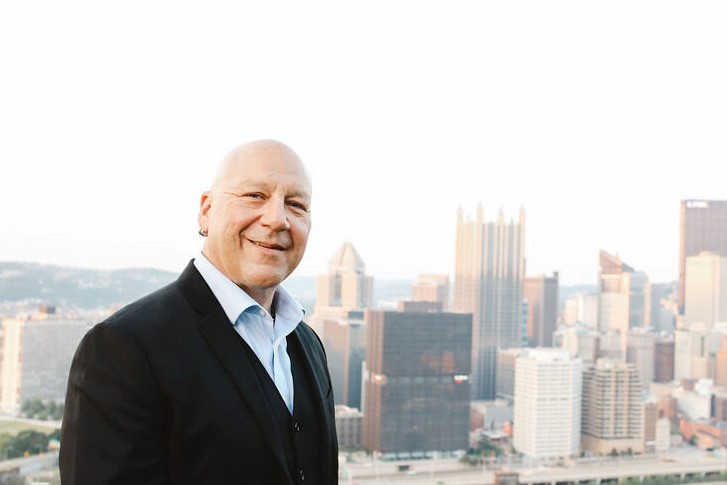
Photo Courtesy of Tony Moreno for Mayor of Pittsburgh